Epoxy Floors in Palatine, Built on a Ground and Tested Slab

Garage, basement and commercial floor coatings installed over mechanically prepared concrete, with moisture testing written into every scope.

Palatine Epoxy Floors brings more than 20 years of epoxy flooring work to homes and businesses in Palatine, IL, coating garage floors, basements, shop floors and commercial kitchens. Our work covers epoxy garage floors, polyaspartic coatings, flake and metallic finishes, polished concrete, concrete floor repair and grinding, ESD flooring and commercial floor systems, each built over a slab that has been opened and tested first.

The part of an epoxy floor nobody sees decides how long it lasts. We grind or shot blast every slab instead of acid etching it, we test moisture before a single coat goes down, and the written proposal names the product, the system build and the finished thickness. When a slab needs repair before it can take a coating, we say so during the estimate rather than after the floor has failed.

That approach suits the housing here. Most of Palatine’s homes went up between 1960 and 1989, many with attached garages and basements poured long before modern vapor retarders were standard practice. A floor system that ignores what sits under the slab is a floor system that peels.

Get Your Free Quote

Fast response • No obligation

So we can reach you about your request.

So we can send you a confirmation after you submit this inquiry form.

  • 20+ Years Coating Concrete
  • Moisture Tested Before We Coat
  • Free Written Estimates

What we do

Our Services

Epoxy floor coatings for garages, basements and commercial slabs in Palatine, IL

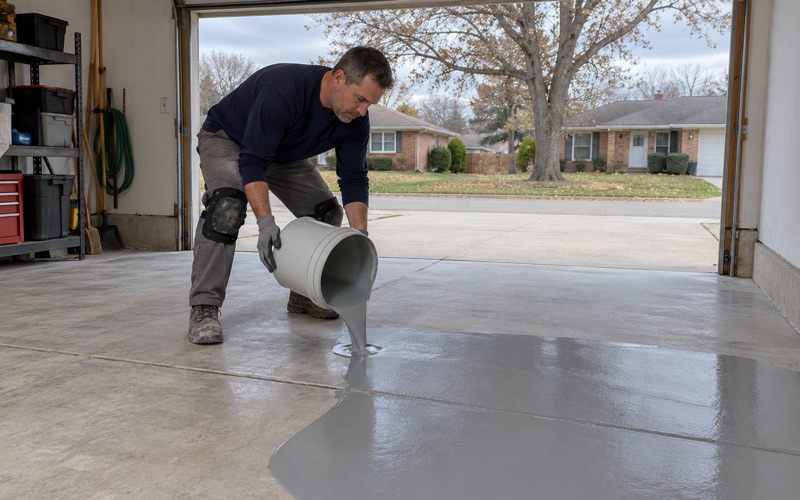
Gray epoxy base coat poured in a ribbon across a freshly ground garage slab in Palatine, the first coat going down.

Epoxy Garage Floor

Full-thickness epoxy garage floor systems for Palatine homes, built over ground and tested concrete to take road salt and hot tires.

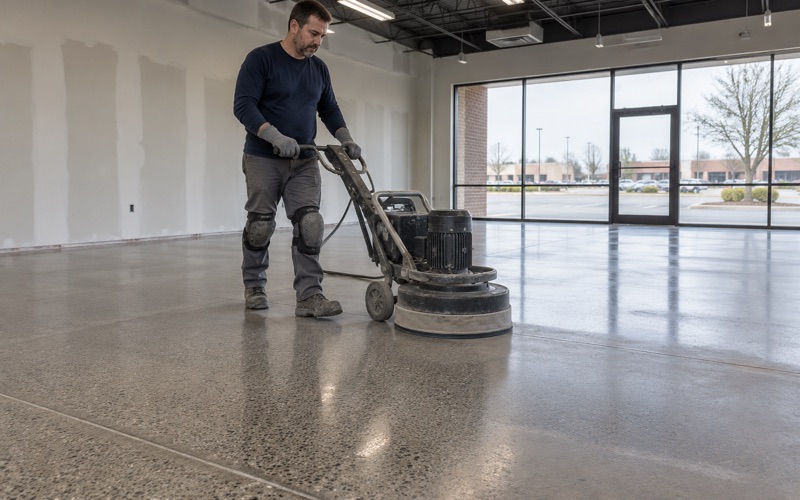
A walk-behind polisher on a polished concrete floor in a Palatine retail space, the last pass bringing up the sheen.

Polished Concrete Floors

Ground, densified and polished concrete floors for Palatine basements, offices, shops and retail spaces, with no coating to peel.

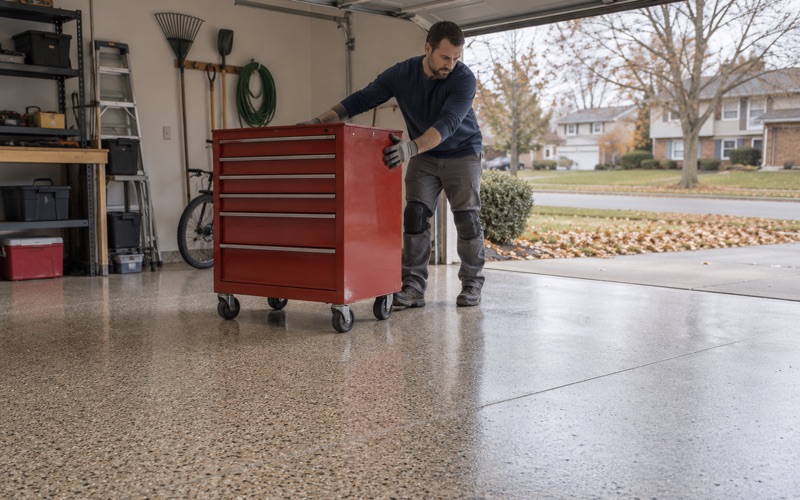
A rolling tool chest wheeled back onto a polyaspartic flake garage floor in Palatine the same day the floor was coated.

Polyaspartic Floor Coating

Fast-curing, UV-stable polyaspartic floor coatings for Palatine garages and commercial floors, installed over properly ground concrete.

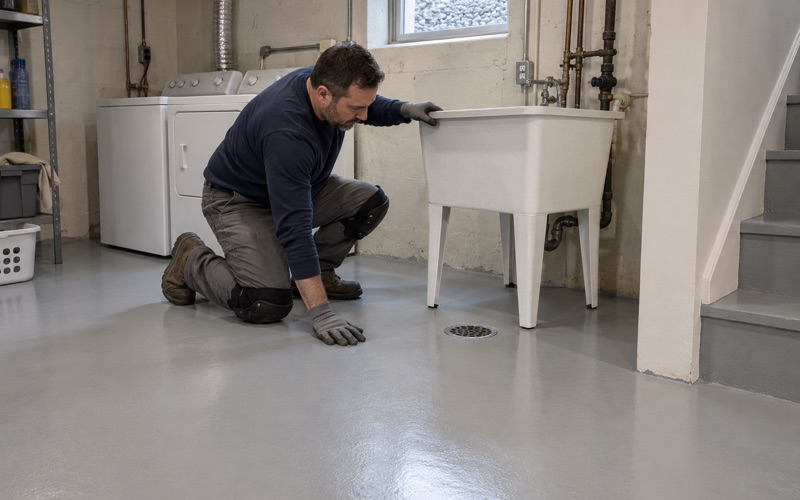
A freestanding laundry tub set back on a new light gray epoxy basement floor in a Palatine house, beside the floor drain.

Basement Floor Epoxy

Basement floor epoxy for Palatine homes, built on a moisture test, the right primer and careful detailing around sump pits and drains.

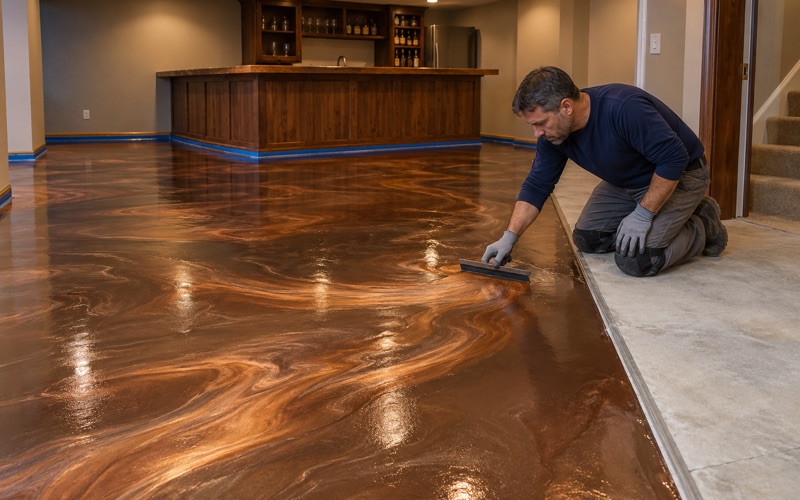
A copper and bronze metallic epoxy pour being worked across a finished basement bar room in a Palatine house.

Metallic Epoxy Floor

Marbled metallic epoxy floors for Palatine basements, garages, showrooms and offices, installed by hand over a flawless prepared base.

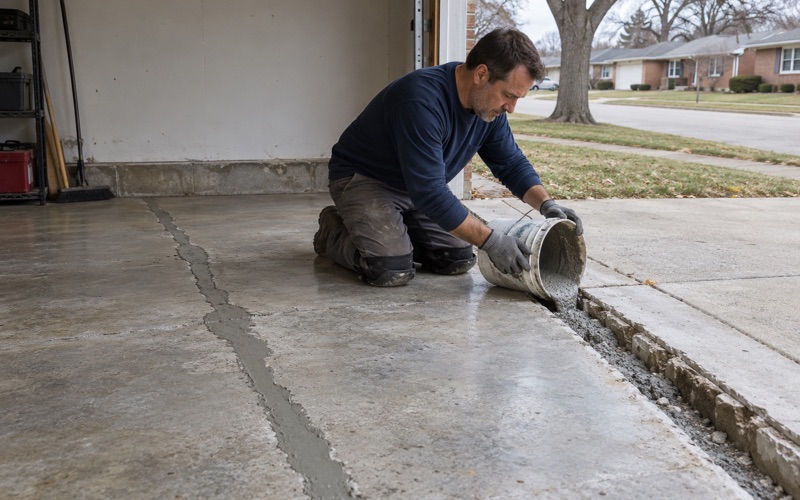
Repair mortar poured into a salt-damaged door edge of a Palatine garage slab, broken out and cleaned before coating.

Concrete Floor Repair

Crack, spall, joint and salt-scaling repair for Palatine garage, basement and commercial slabs, done right before any coating goes down.

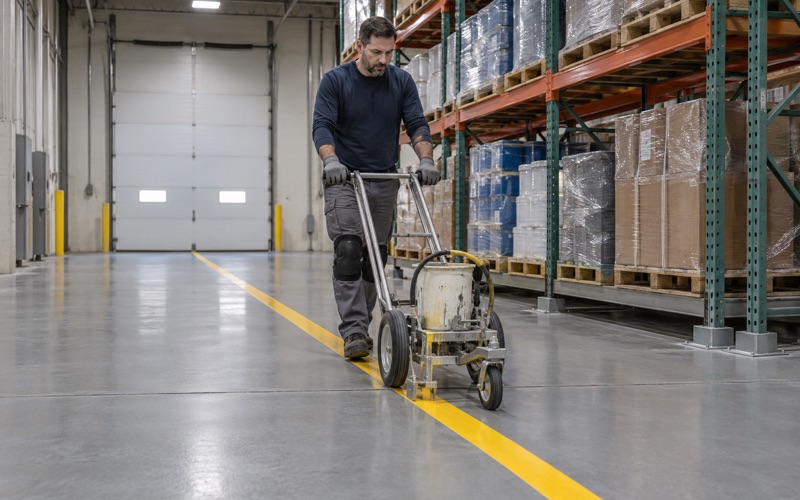
A safety-yellow aisle line laid down on a newly coated light industrial floor near Palatine, racking legs behind.

Commercial Epoxy Flooring

Epoxy floor systems for Palatine warehouses, plants, labs, service shops and retail spaces, scheduled around the hours you operate.

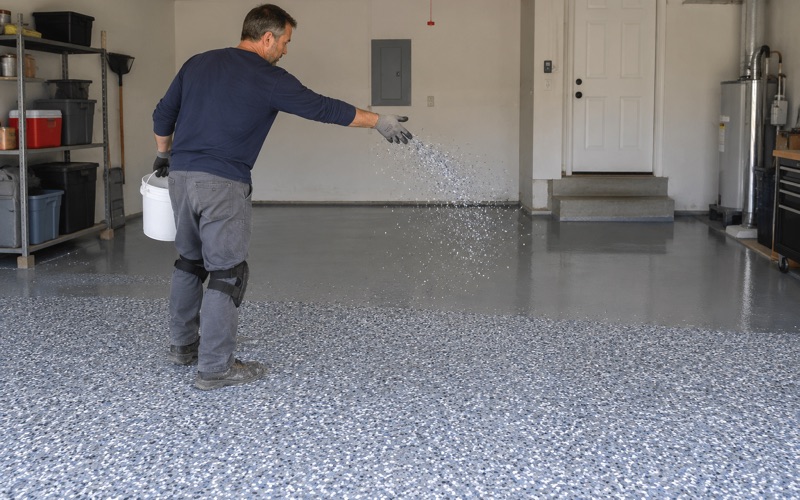
Vinyl flake cast by hand across a wet base coat in a Palatine garage, an arc of gray and blue chip mid-air.

Flake Epoxy Floor

Full-broadcast vinyl flake epoxy floors for Palatine garages, basements and shops, sealed under a durable clear topcoat.

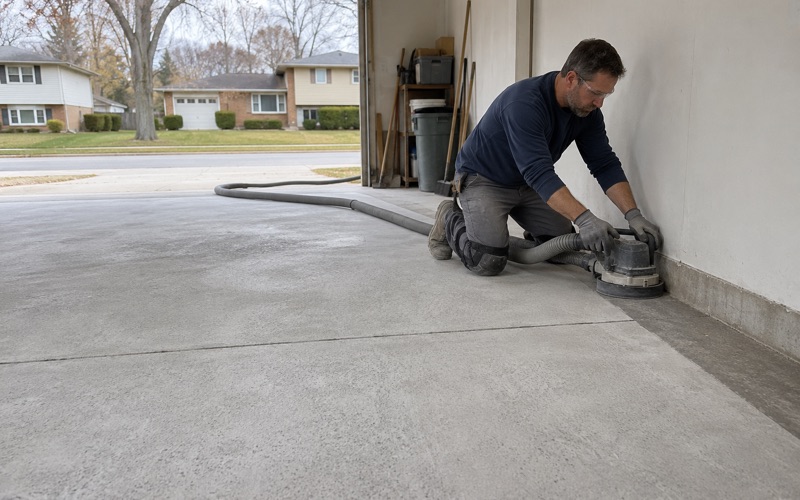
An edge grinder cutting the last strip along the wall of a Palatine garage slab, the field already ground open.

Concrete Grinding

Diamond grinding and shot blasting for Palatine slabs: coating and adhesive removal, leveling and surface profiling with dust control.

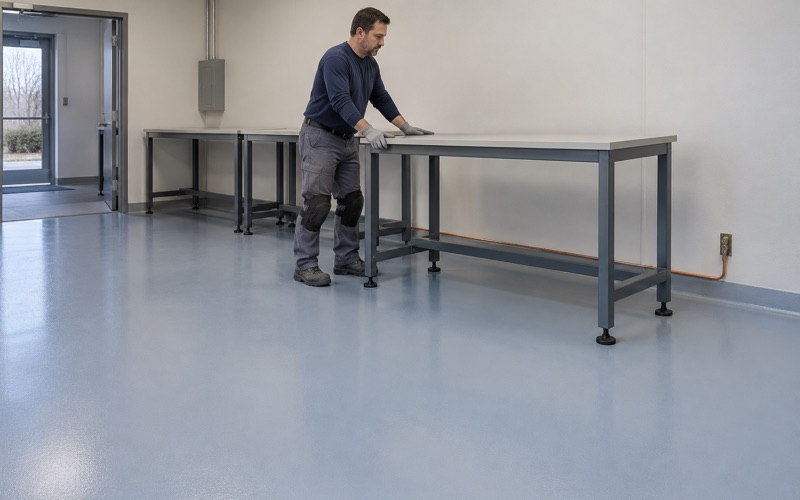
A static-safe workbench being set on a new dissipative floor in a small electronics assembly room near Palatine.

ESD Flooring

Conductive and static-dissipative resin floors for Palatine electronics, lab and server spaces, installed, grounded and tested.

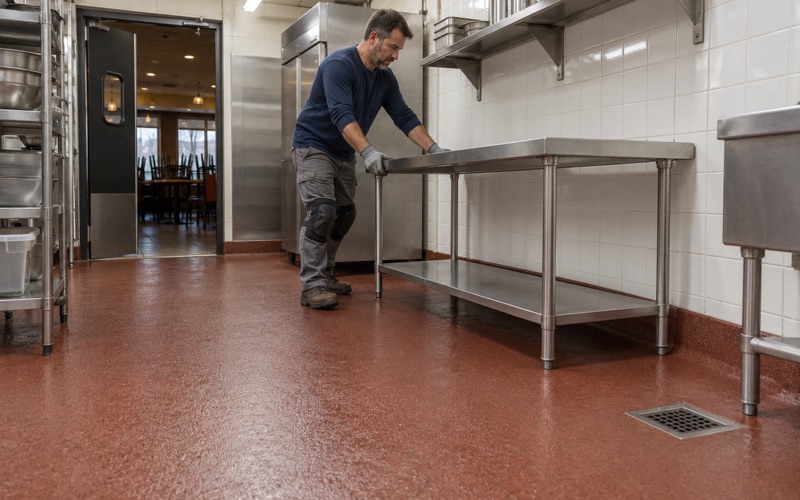
A stainless prep table slid back onto a new urethane cement kitchen floor in Palatine, the coved base rising behind it.

Commercial Kitchen Flooring

Seamless, slip-resistant kitchen floors with integral coving for Palatine restaurants and food businesses, built for hot washdown.

Two Decades of Coating Concrete

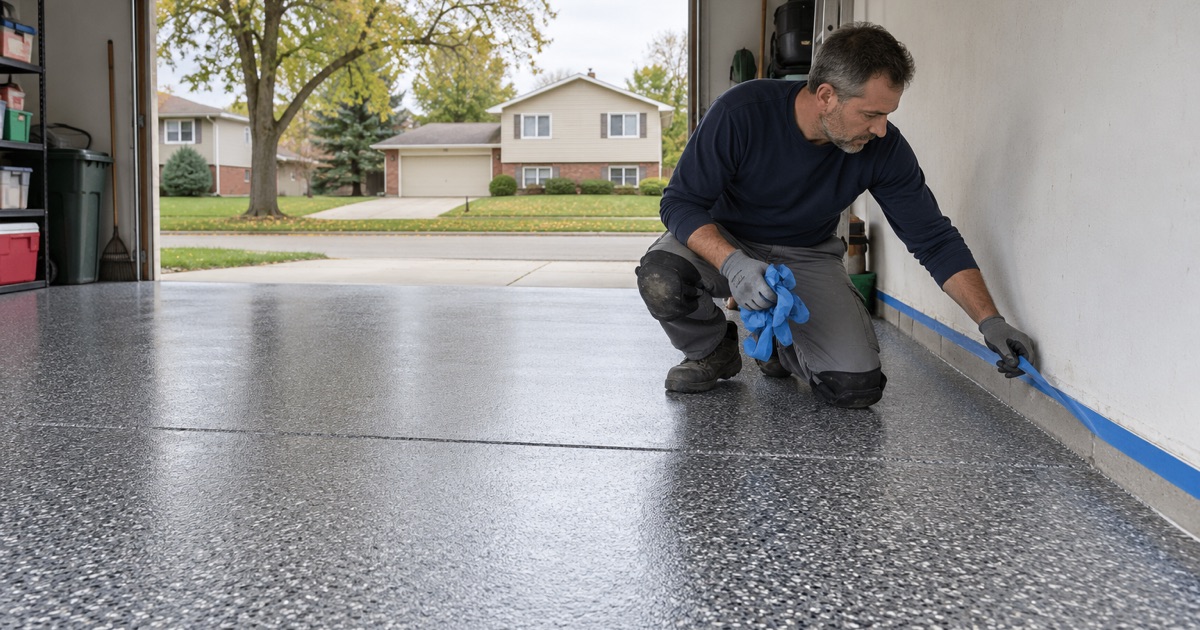
A finished gray and white flake floor in the attached garage of a 1970s Palatine split-level, the masking tape being pulled.

More Than 20 Years of Floor Coating Experience

We have spent more than 20 years preparing, repairing and coating concrete floors. That experience shows up in the estimate as much as the install: knowing which old coatings lift easily, which cracks will keep moving, and which slabs need a moisture test before anyone can honestly quote a system.

Why Choose Palatine Epoxy Floors

Ground, Never Etched

Every slab is opened with a diamond grinder or shot blaster to a measured ICRI surface profile, so the primer bites into clean concrete rather than sitting on the weak cream layer that acid etching leaves behind and a peeling kit floor usually reveals.

Moisture Testing in the Scope

No floor gets coated on a guess. Palatine garage slabs poured under the model code may have no vapor retarder beneath them, and spring groundwater rises close to the surface here, so a moisture test is a written line item rather than an afterthought sold once a coating has blistered.

Salt-Ready Garage Systems

Northern Illinois winters track calcium chloride brine and rock salt onto every garage floor, so our garage systems are built with a chemical-resistant topcoat at a stated thickness rather than the thin single coat that lets salt water reach the concrete and scale it.

Quotes You Can Check

Each proposal names the resin, the system layers and the finished film thickness, so what was quoted can be measured against what went down, rather than a one-line price for an epoxy floor that could mean almost anything.

Written Contracts for Every Home

Illinois law requires a written contract and the Home Repair: Know Your Consumer Rights pamphlet before home repair work starts, and every residential job here gets both, so homeowners know their cancellation rights rather than learning about them after the deposit clears.

The Garage Floor, Start to Finish

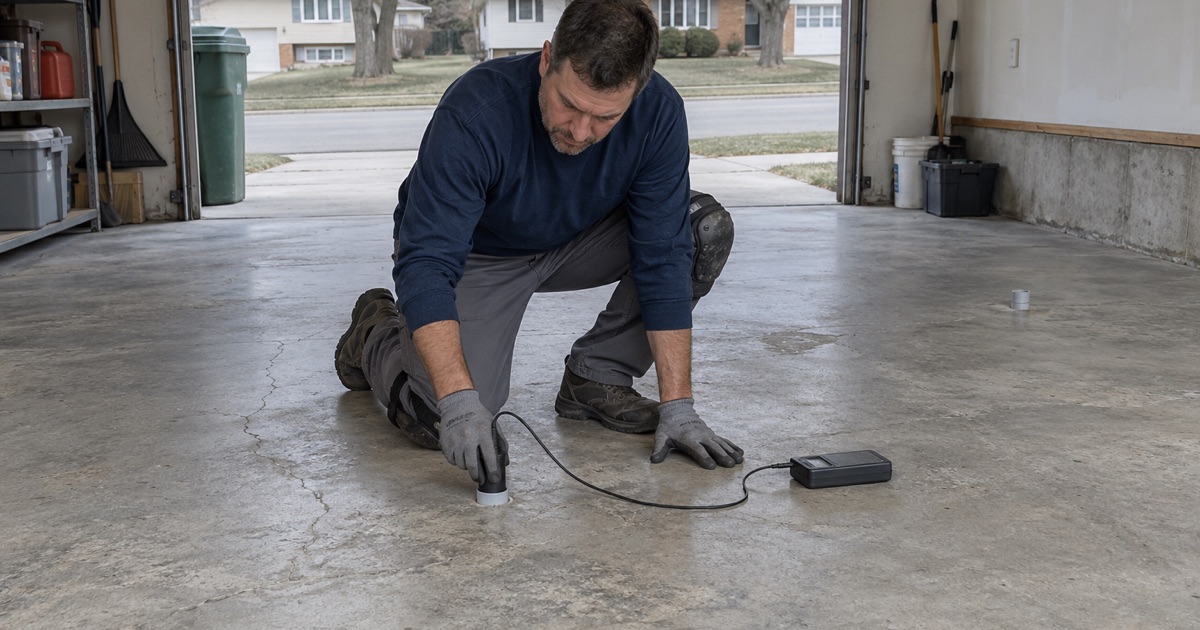
A relative humidity probe being set into a drilled hole in a bare Palatine garage slab before any coating is chosen.

What an Epoxy Garage Floor Job Involves

An epoxy garage floor job starts with a look at the slab, the cracks and any old coating, followed by moisture testing. Install day covers grinding, repairs, primer, base coat, broadcast and topcoat, and the cure window is set by slab temperature. You get a date to walk on the floor and a later date to park on it.

Diamond Grinding Before Any Garage Coating

A coating applied over sealed, painted or troweled-smooth concrete has nothing to grab, and it releases in sheets once hot tires and winter salt work at it. We diamond grind the slab open, remove the old film and vacuum the dust, so the primer soaks into sound concrete instead of bonding to a surface already failing.

Garage Slab Moisture and the Missing Vapor Retarder

The residential code exempts garage slabs from the vapor retarder required under living space, and Palatine’s own amendments leave that exemption in place. A newer garage can therefore sit directly on gravel with nothing stopping ground moisture, which is why we test with calcium chloride kits or in-situ relative humidity probes before quoting a system.

Reading the Cracks in Your Garage Floor

Hairline shrinkage cracks, settled sections and cracks with one side higher than the other each mean something different. We fill stable cracks with a rigid repair material and grind them flush, but we tell you plainly that a coating follows the slab under it, so a crack that keeps moving will show through any floor.

Calcium Chloride, Rock Salt and Bare Concrete

Deicing brine soaks into bare concrete, then freezes and expands in the pores, and over a few winters the surface scales and pops. A properly built garage coating keeps that brine on top where a squeegee can move it, which is often the first reason Palatine homeowners call us rather than appearance.

Winter Installs in Unheated Garages

Resin cures by chemistry, and chemistry slows in a cold slab. We measure slab temperature and the dew point spread at the surface before mixing, because coating a slab close to its dew point invites amine blush and poor adhesion. An unheated garage in January sometimes has to wait for spring, and we say so.

Hot Tire Pickup and Why Coatings Lift

A tire that has just come off the highway is hot and soft, and as it cools on the floor it grips the coating beneath it. Thin store-bought epoxies and paints peel under that grip. Full-thickness systems with a well-bonded base and a hard polyaspartic topcoat resist hot tire pickup far better.

Epoxy Garage Floor Kits Compared With Professional Systems

Most kits rely on acid etching and a thin water-based epoxy, and many fail in the tire tracks within a year or two. A professional system replaces the etch with mechanical grinding, uses 100% solids epoxy or polyaspartic at real thickness, and builds in crack repair, so the difference is the preparation rather than the color chips.

What an Epoxy Garage Floor Costs

Garage size sets the baseline, but the condition of the slab moves the number most. Removing an old coating, repairing cracks and spalls, adding a moisture-mitigation primer, and choosing full flake broadcast or a metallic finish each change the price, and every one appears as its own line on the proposal.

Garage Floor Warranty Exclusions

Nearly every coating warranty excludes failures caused by moisture rising through the slab, and many also exclude movement cracks and chemical spills left standing. We read those exclusions out before you sign, with moisture first, because the time to learn what is not covered is before the job is sold.

Basements and the Water Under Them

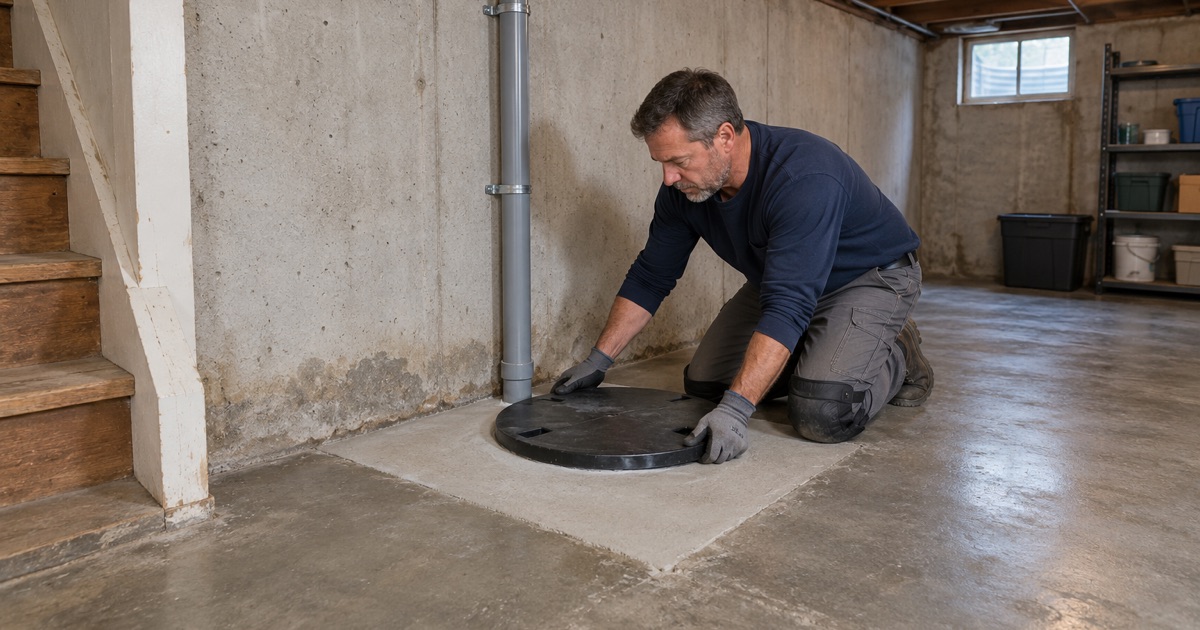
A sealed ejector pit lid being set flush in a Palatine basement floor after overhead-sewer work, before the floor is coated.

Basement Floor Epoxy and the Moisture Question

A basement slab sits in the ground, so the first question is how much moisture moves through it, not which color to pick. We start every basement floor epoxy job with testing, then choose between a standard primer and a moisture-mitigation primer based on the reading rather than on how dry the floor looks.

Spring Water Tables Under Palatine Basements

Central Palatine sits on poorly drained till-plain soils, and Ashkum silty clay loam carries a seasonal water table near the surface from January into May. That water presses against walls and slabs as hydrostatic pressure, so a basement floor that seems dry in August can push a coating off by April.

Efflorescence on a Basement Floor

The white powder that appears on some basement floors is mineral salt left behind as water moves through concrete and evaporates. It tells us moisture is active, and it has to be ground away completely, because a coating laid over efflorescence is bonded to dust rather than to the slab.

Floor Drains, Sump Pits and Basement Edges

Floor drains, sump pits and ejector pits are where coatings most often fail, because water collects there and the concrete is usually rough. We detail each opening with care, keep lids removable and serviceable, and end the coating cleanly at walls so water can still reach the drain.

Coating a Basement Floor After a Sewer Backup

A basement that has taken a sewer backup needs cleaning, disinfection and complete drying before anything is applied, and the concrete often holds contamination below the surface. We grind past it, test moisture once the slab has dried, and coat only when the readings say the floor is ready.

Overhead Sewers, Check Valves and Plumbing First

Palatine treats pre-1973 basements as exposed to sewer backup and cost-shares check valves, overhead sewer conversions and footing-drain disconnections through its Basement Protection Program. If that plumbing work is planned, it should happen before the floor is coated, because a converted basement gains an ejector pit and a sump pit to detail around.

Moisture-Mitigation Primers for Basements

When testing shows more vapor movement than a standard epoxy can tolerate, a moisture-mitigation primer goes down first as a dedicated layer rated for higher readings. It adds cost, and it is the difference between a basement floor that lasts and one that blisters within a season.

Finished Basements, Playrooms and Home Gyms

A coated basement slab gives a playroom, laundry or home gym a floor that wipes clean and shrugs off dropped weights. We choose a texture that stays safe underfoot when wet, and we leave the edges ready for baseboards or rubber mats.

Radon and Floor Coatings

A floor coating is not radon mitigation, and in Illinois radon mitigation work requires a license from the state emergency management agency. If radon is a concern, a licensed mitigator should test and treat the home, and we coat the floor around any suction point they install.

What a Basement Floor Coating Will Not Fix

A coating will not stop water entering through a cracked wall, fix grading that sends runoff toward the house, or close a slab that has heaved. Those problems need drainage, plumbing or structural work first, and we would rather point you there than sell a floor that the water will lift.

Color, Flake and Finish

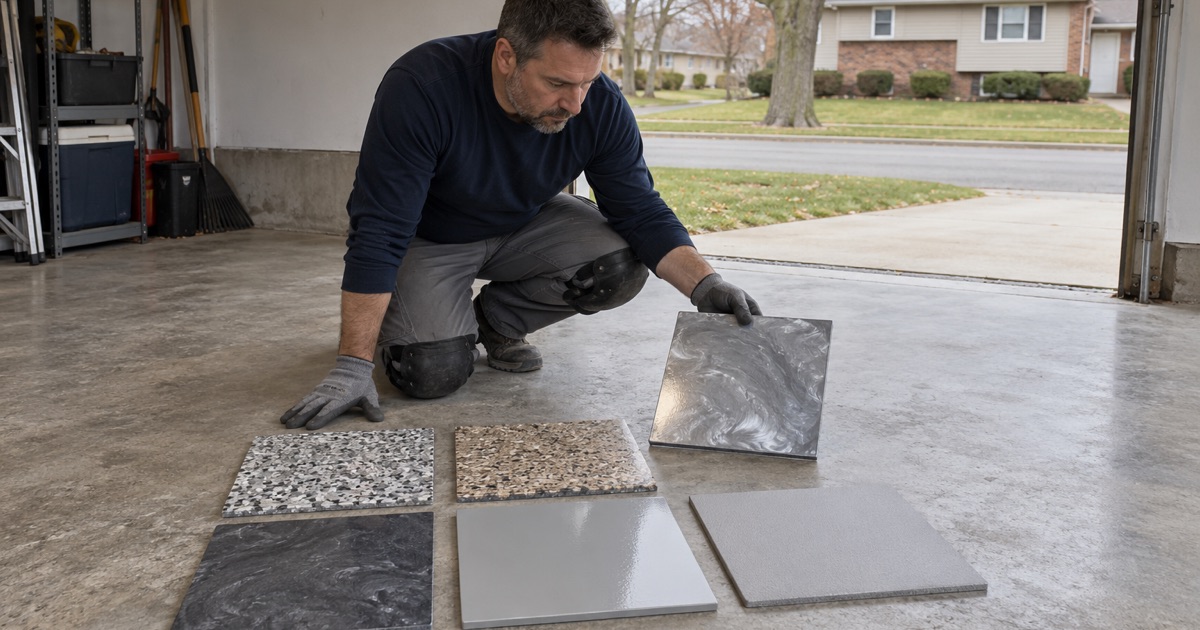
Coated sample panels laid out on a Palatine garage floor, one lifted into the daylight at the door to compare finishes.

Vinyl Flake Blends and Chip Sizes

Vinyl flake floors broadcast colored chips into wet epoxy until the surface is fully covered, then seal them under a clear topcoat. Larger chips read bolder and hide more, smaller chips look finer and more uniform, and the blend you choose decides how well the floor disguises dirt and salt residue between cleanings.

Metallic Epoxy Floors and the Marbled Look

Metallic epoxy uses pearlescent pigments that drift and swirl as the resin flows, which creates a marbled, three-dimensional finish no two floors share. It needs a smooth, flawless base and careful hand work, because every ridge and roller mark shows through the movement in the pigment.

Polished Concrete and Aggregate Exposure

Polished concrete is the slab itself, ground through progressively finer diamonds and hardened with a lithium silicate densifier. How deep we grind decides the look, from a cream finish with little stone showing to full aggregate exposure, and the right choice depends on what your slab holds.

Gloss, Satin and Matte Finishes

A high-gloss topcoat reflects light and looks dramatic but shows dust, scratches and tire marks. Satin and matte finishes hide everyday wear far better, which is why many garage and basement owners choose them. We show samples under real light before you decide.

Quartz Broadcast Floors for Grip and Color

Quartz aggregate broadcast into epoxy delivers color and a slip-resistant texture in one system, which makes it popular for commercial kitchens, locker rooms and wet entries. The texture is set by aggregate size and topcoat build, so we tune it to how the floor gets cleaned.

Solid Color Epoxy Coatings

A solid color epoxy coating is the simplest system, and in a workshop, utility room or warehouse it is often the right one. It brightens a space, makes dropped parts easy to find and cleans quickly, and it costs less than a full broadcast system.

Ultraviolet Light and Ambering

Standard epoxy yellows, or ambers, when sunlight reaches it, which matters in a garage with the door open most afternoons. Polyaspartic and polyurea topcoats hold their color under ultraviolet exposure, so we put a UV-stable topcoat wherever daylight hits the floor.

Saw-Cut Lines, Borders and Inlaid Logos

Saw-cut lines can divide a floor into patterns, separate a work zone from parking, or frame a border in a contrasting color. Shops and showrooms sometimes add an inlaid logo, which is laid out and coated in stages before the final clear coat seals it in.

Townhomes, Condo Buildings, Kitchens and Shop Floors

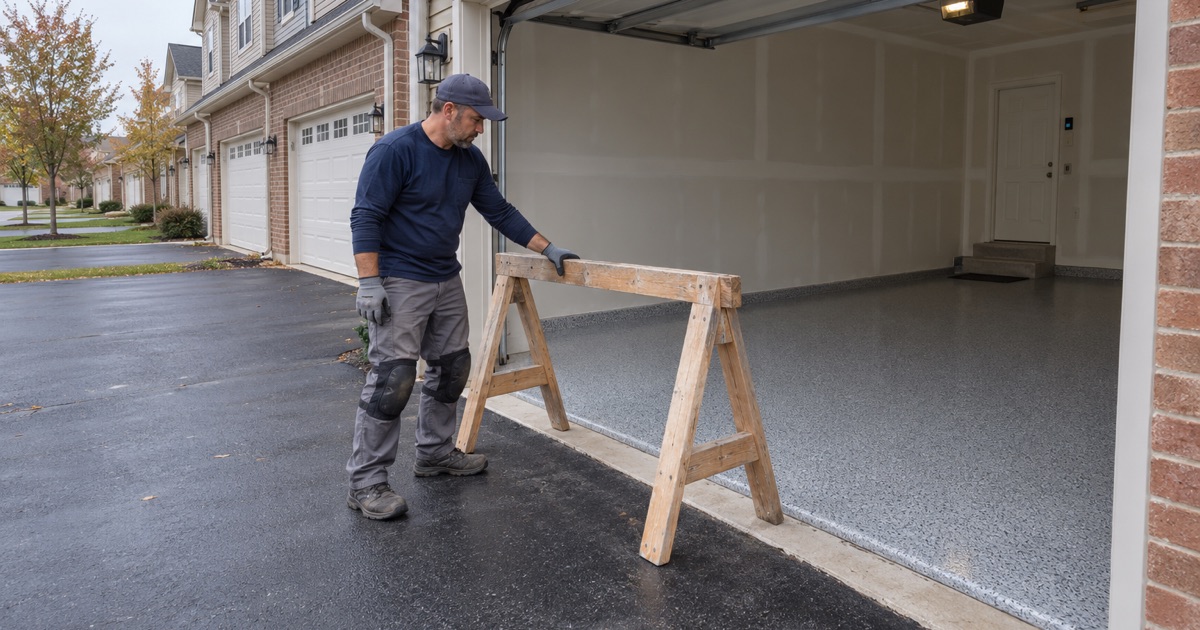
One garage in a row of Palatine townhomes being coated, a barricade across its door while the neighbors’ doors stay closed.

How Commercial Epoxy Flooring Differs

Commercial floors carry heavier traffic, chemicals and cleaning routines, and they usually have to be finished inside a fixed shutdown window. That changes the system, the preparation equipment and the schedule, and it often means phasing the floor in sections so the building keeps operating.

Townhome and Condominium Garage Coatings

Around 15 percent of Palatine’s homes are townhomes, and association garages are a board decision. We work from the board’s approval, follow its rules on hours and staging, and schedule so neighbors can still reach their own garages during the cure.

Warehouse and Light-Industrial Floors

Forklift traffic, pallet jacks and dropped loads destroy thin coatings quickly. Distribution and light-industrial floors need thicker 100% solids systems, repaired joints and sometimes safety striping, so we size the build to the equipment that actually crosses the floor.

Cooler and Freezer Floor Systems

Walk-in coolers and freezers expose a floor to cold, condensation and constant cleaning, and many resins become brittle at low temperatures. We specify systems rated for those conditions and plan the install around the time the refrigeration can be shut down.

Static-Dissipative and ESD Floors

Electronics assembly, data rooms and some labs need a floor that bleeds static charge to ground in a controlled way. ESD flooring uses conductive layers and grounding points, and we test the finished floor against the resistance range the space specifies.

Laboratory Floors and Chemical Resistance

Laboratories spill acids, solvents and cleaning agents that soften ordinary coatings. We match the resin to the chemicals actually used in the room, coving where spills collect at walls, so the floor stays sealed rather than staining and breaking down.

Auto and Equipment Service Bays

Service bays take hot tires, jack stands, oil and brake fluid all at once. A thick epoxy base with a chemical-resistant topcoat and a light texture keeps the floor safe and cleanable, and we detail trench drains and lift pads so fluids drain away.

Commercial Kitchen Floors Under the Illinois Food Code

The Illinois Food Code follows the 2022 FDA Food Code, which calls for smooth, durable, cleanable floors and coved junctures where floors meet walls in wet areas. Palatine’s own inspectors enforce it, so we build integral coving and the right slip texture into kitchen floors from the start.

Urethane Cement for Hot Washdown

Where kitchens and food plants run hot water and steam washdown, standard epoxy can soften and debond. Urethane cement handles thermal shock and moisture far better, so we specify it for those zones even when the rest of the building takes epoxy.

Illinois VOC Limits on Floor Coatings

Illinois limits the VOC content of architectural and industrial maintenance coatings under 35 Ill. Adm. Code Part 223, and the rule binds the installer applying the product as well as the manufacturer. We choose compliant materials, so a cheap high-solvent product never ends up on your floor.

Coating Floors in Buildings That Stay Open

Stores, offices and kitchens often cannot close for a week. We phase work into sections, work early mornings, evenings and weekends within the hours the village allows, and pick fast-curing systems where downtime is short, so the building keeps serving customers while the floor gets done.

Areas We Serve

Palatine Epoxy Floors provides epoxy-flooring throughout the greater Palatine area, with the same crews and the same standards on every job.

Good to know

Frequently Asked Questions

How long does an epoxy garage floor take from start to finish?

Most two-car garages take one to three working days, depending on how much crack and spall repair the slab needs and which system goes down. Light foot traffic usually follows within a day, and parking waits until the topcoat has cured at the slab temperature we measured, which in a cold garage takes longer than the label suggests.

Do I need a permit to coat my garage or basement floor in Palatine?

Coating an existing interior slab falls under the finish-work exemption the village keeps in its building code, alongside painting and tiling. Pouring or replacing a driveway, patio or private walk is a different matter, because Palatine lists those as express permits. If your project includes new concrete, we tell you which part needs the permit before scheduling.

Are you licensed for epoxy floor work in Illinois?

Illinois issues no state license for flooring or coating work, so any contractor quoting a coatings license number is describing something that does not exist. What villages ask for instead is local contractor registration, a bond and proof of insurance, and we provide whatever the municipality where your floor sits requires.

What is the difference between epoxy and polyaspartic?

Epoxy is a two-part resin with a long working time that builds thickness and bonds well to prepared concrete. Polyaspartic cures much faster, holds its color under sunlight and stays workable at lower temperatures. Many of our garage systems use both, with epoxy as the base and a polyaspartic topcoat over the broadcast.

Will an epoxy coating stop my basement from leaking?

No. A coating is a film bonded to the top of the slab, and water pushing up from underneath will eventually lift it. Leaks need drainage, grading or plumbing work first. Once the slab tests within range, or a moisture-mitigation primer is specified, a coating protects and finishes the floor rather than waterproofing it.

Can you coat over my existing painted or coated floor?

Rarely as it sits. Most old garage paints and kit coatings have to come off, because a new coating is only as strong as the layer it bonds to. We test the existing film during the estimate and grind it off where it fails, so the new system bonds to concrete instead of to a coating already letting go.

How soon can I drive on a new garage floor?

That depends on the topcoat chemistry and the temperature of the slab, not on a fixed number of days. Fast-curing polyaspartic systems often allow parking sooner than an all-epoxy floor. We give you a written return-to-service date based on the products used and the conditions recorded on the day of the install.

What goes into the price of an epoxy floor?

Square footage sets the baseline, and the condition of the slab moves it most: removing an old coating, filling cracks and spalls, and adding a moisture-mitigation primer each add real cost. The system matters too, since full flake broadcast, metallic finishes and polished concrete use different materials and labor. Every proposal itemizes those lines.

Do you work on townhome and condominium garages?

Yes. Association garages and common floors are decided by the board, so we work from the association's approval and its rules on hours, parking and staging. Scheduling keeps neighbors able to reach their own garages, and the cure window is planned so nobody's car is stranded.

Does an epoxy floor come with a warranty?

Product and workmanship warranties are common, and the exclusions matter as much as the length. Moisture from below is almost always excluded, which is why we test before coating and read the exclusions aloud before you sign. You will know exactly what is covered before the job is sold.
Ready to Get Started?

Request a free quote today and we'll get back to you fast.